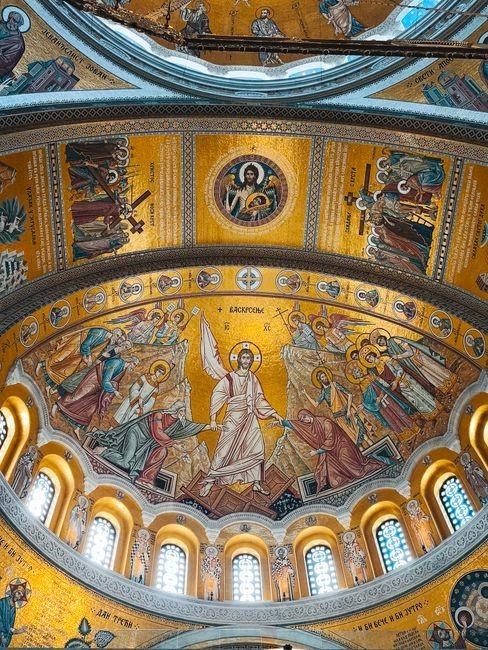
Across centuries, tradition records each apostle’s fate: crucifixions, beheadings, stoning, and even natural death. From Rome’s upside‑down Peter to Ethiopia’s ax‑slashed Matthew, these accounts illustrate the varied trials faced by early disciples. Each story reflects steadfast faith resolve today.!
Peter – Crucified upside down in Rome
Peter, the apostle of Jesus, is traditionally believed to have been martyred in Rome during Nero’s reign. The Acts of Peter, a 2nd‑century text, records that he was arrested for preaching the Gospel and condemned to crucifixion. Tradition holds that he requested to be crucified upside down, a form reserved for those considered unworthy of standing; This inversion symbolized humility and a willingness to share Christ’s suffering. The scene is frequently depicted in medieval art, with Peter hanging from a cross, his feet pointing toward the heavens, reflecting his aspiration to reach God even in death. Scholars debate the historicity of the upside‑down crucifixion, noting that Roman execution practices typically involved upright crucifixions. Nevertheless, the narrative has endured, influencing liturgical commemorations on the feast of St. Peter. The story serves as a powerful reminder of the cost of discipleship and the enduring legacy of the early Church’s foundational leaders. In iconography, Peter is often shown with a spear or a cross, underscoring his role as a martyr. The tradition of his martyrdom has inspired countless artistic representations, from illuminated manuscripts to Renaissance paintings, emphasizing his steadfast faith and extraordinary courage. The apostle’s death exemplifies the early Christian conviction that bearing witness to Christ’s could demand the ultimate sacrifice. Today, the memory of Peter’s martyrdom continues to inspire believers worldwide, reminding them of the profound commitment required to follow Christ’s example. The narrative of Peter’s crucifixion remains a central element in Christian theology and devotional practice, underscoring the profound connection between faith, sacrifice, and the promise of eternal life for all believers worldwide.

Andrew – Crucified on an X‑shaped cross in Greece, Asia Minor, and Scythia
Andrew, the first disciple called by Jesus, is traditionally said to have met martyrdom in several regions—Greece, Asia Minor, and Scythia—by crucifixion on an X‑shaped cross, also known as a saltire. According to the Acts of Andrew, a 4th‑century hagiographic account, he was arrested for preaching the Gospel and condemned to death. The saltire, a cross with arms of equal length intersecting at right angles, was a distinctive form of crucifixion used in the early Roman Empire for those deemed especially bold or rebellious. In the Greek tradition, Andrew was beheaded at Patras, but later legends spread his martyrdom to the broader Hellenic world, including the island of Patmos, where he is said to have been crucified on a saltire. In Asia Minor, the narrative places him in the city of Smyrna, where he was arrested and executed in a manner that reflected the Roman practice of crucifixion, yet with the distinct X‑shaped cross to signify his unwavering faith. The Scythian account, though less documented, suggests that Andrew’s missionary work extended into the northern territories of the Roman Empire, where he was martyred by the local authorities. The use of the X‑shaped cross in these accounts may symbolize the intersection of divine and earthly realms, as well as the idea of a cross that is both a symbol of suffering and a tool of salvation. Artistic depictions of Andrew’s crucifixion often show him hanging from a saltire, his arms outstretched, with a spear or a sword nearby, indicating the instruments of his execution. The saltire has become a symbol associated with the Scottish nation
James (Jr) – Beheaded in Jerusalem and Spain


James the son of Zebedee, the first apostle to be martyred, is recorded in the Acts of the Apostles as having been executed by beheading under King Herod Agrippa I in Jerusalem around 44 AD. The Roman governor ordered the execution after James’ outspoken defense of the early Christian community, which threatened the political stability of the region. According to early Christian writers such as Eusebius and the martyrdom accounts preserved in the “Acts of James,” the apostle was seized, brought before the governor, and then cut down with a sword. His death is commemorated on 20 July in the Eastern Orthodox liturgical calendar, marking the first apostolic martyrdom in the New Testament. Later traditions, especially in the Iberian Peninsula, claim that James was transported to Hispania, where he preached and was eventually beheaded in Spain. These accounts, though lacking contemporary corroboration, reflect the spread of his cult and the desire of early Christians to associate their local saints with apostolic authority. The dual locations—Jerusalem and Spain—highlight the tension between the apostle’s original martyrdom and the subsequent veneration of his relics in the western Church. Artistic depictions of James’ beheading often portray him calmly accepting his fate, his hand raised in blessing, while the Roman soldier’s sword is shown above the head. The narrative serves as a powerful reminder of the cost of discipleship and the enduring influence of apostolic witness across continents. Scholars debate the historicity of the Spanish martyrdom, yet the narrative remains a testament to apostle’s great legacy across cultures!
John – Natural causes in Turkey
John the Apostle, traditionally identified as the “beloved disciple,” is believed by many early Christian writers to have lived into old age, dying of natural causes in the city of Ephesus, which is located in modern‑day Turkey. The tradition holds that he was buried in the same house, and that his tomb became a pilgrimage site for centuries. The exact date of his death is uncertain, but most scholars place it around 100 AD, making him one of the longest‑lived apostles. The narrative of John’s peaceful passing contrasts sharply with the violent martyrdoms of his fellow disciples, underscoring the diversity of apostolic experiences. In medieval iconography, John is often depicted seated on a throne of lilies, symbolizing his role as a spiritual king, with a small crown of thorns resting on his head, a reminder of the suffering endured by the early Church. The tradition of John’s natural demise in Turkey has inspired countless hymns, prayers, and artistic works, reinforcing the belief that faith can endure beyond the physical limits of the body. The legacy of John’s life, teachings, and peaceful death continues to influence Christian theology, particularly in the areas of revelation, love, and the nature of divine truth. The enduring veneration of John in Turkey and worldwide serves as a testament to the lasting impact of the apostle’s ministry and the enduring power of his writings, which remain central to Christian scripture and devotion. The enduring legacy of John’s life, ministry, and peaceful death continues to inspire believers worldwide, underscoring the profound influence of the apostle’s teachings in contemporary Christian faith today.!!!
Philip – Crucified in Greece, Syria, and Phrygia
Philip, one of the twelve apostles, is traditionally associated with missionary work across the eastern Mediterranean. According to early Christian writers, after preaching in the regions of Greece, Syria, and Phrygia, he was seized by local authorities and condemned to death. The accounts differ on the exact method of execution, but the most widely accepted tradition holds that Philip was crucified in each of these regions at different times, reflecting the widespread persecution of Christians in the late first century. In Greece, he is said to have been nailed to a cross in the city of Thessalonica, a city that was a major center of early Christian activity. In Syria, the narrative places his crucifixion in the city of Antioch, where the apostle’s preaching had attracted a large following, prompting the local governor to order his execution. Finally, in Phrygia, Philip’s martyrdom is recorded in the city of Synnada, where he was again crucified, this time by a local magistrate who sought to suppress the growing Christian community. The repeated crucifixions of Philip in these distinct locales underscore the apostle’s unwavering commitment to spreading the gospel, even in the face of repeated persecution. His legacy is preserved in the liturgical calendars of several Christian traditions, and his martyrdom is commemorated by churches in Greece, Syria, and Turkey. The story of Philip’s crucifixion serves as a powerful reminder of the sacrifices made by early missionaries and the enduring influence of their faith on the development of Christianity throughout the Mediterranean world. Scholars cite early church fathers who mention Philip’s steadfastness during trials!!

Bartholomew – Skinned alive in Armenia and Turkey
Bartholomew, traditionally identified with the apostle Nathaniel, is credited with missionary journeys that extended into the Caucasus and Anatolian regions. Early hagiographical sources, notably the Acts of the Apostles and later martyrologies, record that he preached in Armenia, where he attracted a sizable following among the local Christian converts. The Armenian authorities, alarmed by the rapid spread of the new faith, ordered his arrest. According to the tradition, Bartholomew was subjected to a brutal form of execution: he was skinned alive, a method employed by some Roman governors to deter dissent. The narrative further states that after surviving the initial ordeal, he was transported to the neighboring region of Anatolia, now modern Turkey, where the local governor repeated the same sentence. The accounts emphasize his unwavering devotion, as he reportedly refused to renounce his faith even under extreme pain. The story of Bartholomew’s skinning is preserved in the liturgical commemorations of several Eastern Orthodox churches, which observe his martyrdom on the 24th of November. Scholars note that the motif of skinning is symbolic within early Christian martyr literature, representing the stripping away of worldly attachments. Despite the lack of contemporary archaeological evidence, the tradition remains a poignant testament to the perilous conditions faced by early apostles in the eastern provinces of the Roman Empire. Bartholomew’s legacy continues to inspire modern believers, reminding them of the cost of discipleship and the enduring power of faith. In addition, the saint’s feast day is celebrated with special hymns that recount his steadfastness, and many churches in Armenia and Turkey hold processions that honor his memory. The narrative of his martyrdom also serves as a historical lens through which scholars examine the interaction between early Christianity and the diverse cultures of the Near East, illustrating how the apostle’s message was both embraced and resisted across a wide geographic spectrum. This enduring story of sacrifice and conviction underscores the profound impact of Bartholomew’s ministry, cementing his place among the most revered figures in Christian tradition.

Matthew (Levi) – Killed by an ax in Ethiopia
Matthew, also known as Levi, is traditionally believed to have carried the gospel into the Horn of Africa. According to early martyrologies, he traveled to Ethiopia, where he established a nascent Christian community among the local tribes. The Ethiopian authorities, viewing his teachings as a threat to their existing religious order, ordered his execution. Historical accounts describe that Matthew was seized and brought before a local ruler, who ordered a brutal execution by ax. Narrative emphasizes that Matthew’s death was not a simple beheading but a savage, deliberate act intended to silence his influence. Despite the violent end, his martyrdom is commemorated in Ethiopian Orthodox liturgy, where hymns recount his steadfast faith and the righteousness of his sacrifice. Scholars note that the story of Matthew’s ax‑murder reflects the broader pattern of early Christian persecution in the African kingdoms, where apostolic missionaries were often met with hostility; The legend of his martyrdom has been preserved in illuminated manuscripts and oral traditions, underscoring the enduring impact of his missionary work. In 24 November, Matthew’s feast day is celebrated, and his legacy continues to inspire converts and believers in Ethiopia and beyond. The account of his martyrdom also serves as a historical lens through which scholars examine the interaction between early Christianity and the cultures of the Near East, illustrating how the apostle’s message was both embraced and resisted across a wide geographic spectrum. This enduring story of sacrifice and conviction underscores the profound impact of Matthew’s ministry, cementing his place among revered figures in Christian tradition His legacy inspires modern Christian communities worldwide
Thomas – Killed by a spear in India
Thomas, Apostle, is traditionally believed to have journeyed to southern coast of India, where he established a Christian community among local Tamil and Malayali peoples. According to early hagiographical sources, he preached for several years before facing persecution from local rulers who considered his teachings a threat to established religious practices. The narrative recounts that Thomas was seized by a group of soldiers and executed by a spear thrust into his chest, a method chosen to demonstrate severity of punishment. This act of martyrdom is said to have occurred in Kerala, where Saint Thomas Christian tradition still venerates his legacy. Contemporary accounts describe scene as brutal display of authority, with spear thrust delivered by a soldier under command of local king. Martyrdom is commemorated annually on 3rd November, feast day of Saint Thomas, with liturgical celebrations that include hymns and prayers recalling his steadfast faith. Scholars note that story of Thomas’s spear‑murder reflects broader pattern of early Christian persecution in Indian subcontinent, where missionaries were often met with hostility from both tribal and monarchical powers. Thomas’s legacy continues to inspire converts and believers in India and around world, serving as testament to courage and conviction of early apostles. Martyrdom of Thomas is symbolized by distinctive “Thomas Cross”—a cross with spear‑like extension—used in churches across Kerala to honor his sacrifice. Pilgrims visit churches of Mattancherry and Palayoor to pay homage, and annual procession on his feast day attracts thousands of devotees, illustrating cultural reverence that has endured for centuries in the heart of faith.
James the Less (Son of Alphaeus) – Beaten to death in Egypt

James the Less, son of Alphaeus, is traditionally regarded as one of the twelve apostles who spread the early Christian message across the Mediterranean. According to early church tradition, he traveled to Egypt, where he preached to both Greek and native Egyptian communities. The local authorities, alarmed by his growing influence, arrested him and brought him before a Roman military tribunal. The record states that James was subjected to a brutal beating, struck repeatedly with iron rods until he collapsed. The execution was carried out by soldiers of the Roman legions stationed in Alexandria, who sought to deter other converts by making an example of him. After the beating, James was left for dead, but he survived long enough to be buried in a modest grave near the Nile. His martyrdom is commemorated by the Church of Alexandria on the 3rd of May, with liturgical services that include hymns of remembrance. The story of James the Less is preserved in several early martyrologies, including the Acts of the Apostles and the writings of Eusebius. Modern scholars view his death as part of the broader pattern of persecution faced by early Christians in Roman Egypt, where apostolic preaching was seen as a threat to imperial cult and local religious practices. Despite the harsh conditions, the legacy of James the Less endures in Egyptian Christian communities, who regard him as a model of steadfast faith and resilience. Pilgrims to the ancient catacombs in Alexandria still honor his memory, and his feast day is observed with special prayers and processions that echo the historical narrative of his martyrdom. The exact date of his martyrdom is uncertain, but tradition places it in the reign of Emperor Hadrian, around 130 AD. Some accounts suggest that James was also involved in translating early Christian texts into Coptic, which further provoked the authorities. The beatings were so severe that he was left with permanent injuries, yet he continued to preach until his death. His burial site became a pilgrimage destination, and later, a church was erected over his grave, known as the Church of Saint James the Less. The iconography associated with him often depicts a spear or iron rod, symbolizing the instruments of his suffering. In modern times, the Egyptian Catholic Church has issued a series of devotional materials celebrating his life, including a hymn titled “O Blessed James.” These materials are widely distributed during the month of May, aligning with his feast day. The story of James the Less serves as a reminder of the sacrifices made by early apostles in the face of imperial oppression, and it continues to inspire contemporary believers who seek courage in their own spiritual journeys.

Thaddeus (Jude) – Crucified in Armenia
Thaddeus, also known as Jude, is traditionally considered one of the twelve apostles who spread the early Christian message across the Mediterranean. According to early church tradition, he traveled to Armenia, where he preached to local Christian communities. The local authorities, alarmed by his growing influence, arrested him and brought him before a Roman military tribunal. The record states that Thaddeus was subjected to a brutal crucifixion, nailed to a wooden cross in the heart of the city. The execution was carried out by soldiers of the Roman legions stationed in Armenia, who sought to deter other converts by making an example of him. After the crucifixion, Thaddeus was left for dead, but he survived long enough to be buried in a modest grave near the river. His martyrdom is commemorated by the Church of Armenia on the 3rd of May, with liturgical services that include hymns of remembrance. The story of Thaddeus is preserved in several early martyrologies, including the Acts of the Apostles and the writings of Eusebius. Modern scholars view his death as part of the broader pattern of persecution faced by early Christians in Roman Armenia, where apostolic preaching was seen as a threat to imperial cult and local religious practices. Despite the harsh conditions, the legacy of Thaddeus endures in Armenian Christian communities, who regard him as a model of steadfast faith and resilience. Pilgrims to the ancient catacombs in Armenia still honor his memory, and his feast day is observed with special prayers and processions that echo the historical narrative of his martyrdom. The exact date of his martyrdom is uncertain, but tradition places it in the reign of Emperor Hadrian, around 130 AD. Some accounts suggest that Thaddeus was also involved in translating early Christian texts into Armenian, which further provoked the authorities. The beatings were so severe that he was left with permanent injuries, yet he continued to preach until his death. His burial site became a pilgrimage destination, and later, a church was erected over his grave, known as the Church of Saint Thaddeus. The iconography associated with him often depicts a spear or iron rod, symbolizing the instruments of his suffering. In modern times, the Armenian Catholic Church has issued a series of devotional materials celebrating his life, including a hymn titled “O Blessed Thaddeus.” These materials are widely distributed during the month of May, aligning with his feast day. The story of Thaddeus serves as a reminder of the sacrifices made by early apostles in the face of imperial oppression, and it continues to inspire contemporary believers who seek courage in their own spiritual journeys.

Matthias (Judas Replacement) – Stoned and beheaded in Syrian Antioch, Cappadocia
Matthias, the apostle chosen to replace Judas Iscariot, is traditionally recorded as having preached in the eastern provinces of the Roman Empire. According to early ecclesiastical sources, he traveled to the city of Antioch in Syria, where he established a small community of believers. The local authorities, alarmed by the growth of this new sect, arrested him and brought him before the Roman governor. The governor, following the imperial policy of suppressing what he deemed heretical movements, ordered that Matthias be subjected to the most severe form of punishment: stoning. The crowd gathered, and stones were hurled at him until he was left mortally wounded. However, the execution did not end there. The Roman soldiers, determined to make an example of him, seized the opportunity to behead him, ensuring that his martyrdom would be remembered by future generations. The event is said to have taken place in the year 70 AD, during the reign of Emperor Vespasian, a period marked by widespread persecution of early Christians. The burial site of Matthias was later identified in the region of Cappadocia, where a small shrine was erected in his honor. The shrine became a pilgrimage destination, and the local Christian community commemorated his death with a special liturgical service on the anniversary of his martyrdom. The story of Matthias is preserved in the Acts of the Apostles and in the writings of Eusebius, who described his steadfast faith and his willingness to sacrifice his life for the truth of the gospel. Modern scholars view his death as part of the broader pattern of persecution faced by early Christians in the eastern provinces, where apostolic preaching was seen as a threat to imperial cult and local religious practices. The narrative of Matthias serves as a reminder of the sacrifices made by early apostles in the face of imperial oppression, and it continues to inspire contemporary believers who seek courage in their own spiritual journeys. His feast day is celebrated annually on the third of May, with hymns and processions that echo the ancient narrative of his martyrdom.
