GE XL44 Oven Manual: A Comprehensive Guide
This detailed manual provides essential guidance for GE XL44 series ranges, covering installation, operation, safety, and troubleshooting for optimal performance.
Explore standard and continuous-clean models (JGBS/JGBC series), ensuring a seamless cooking experience with clear instructions and helpful diagrams.
The GE XL44 series represents a popular line of gas ranges known for their reliability and user-friendly features. This series, encompassing both standard-clean and continuous-clean models, offers a range of options to suit diverse cooking needs and preferences. Models like JGBS03, JGBS04, JGBC17, and JGBC20 are frequently encountered, each designed for efficient and convenient meal preparation.
This manual serves as a comprehensive resource, guiding users through the intricacies of their specific XL44 range. It acknowledges that features and appearances may vary slightly between models, emphasizing the importance of consulting this guide for tailored instructions. Understanding the nuances of your particular model is key to maximizing its performance and ensuring safe operation. The XL44 series aims to deliver consistent results and simplify the cooking process for home chefs.
Understanding Model Variations
The GE XL44 series features distinct model variations primarily categorized as standard-clean and continuous-clean. Standard-clean models, such as JGBS02, JGBS03, JGBS04, JGBS07, and others, require manual cleaning of the oven interior. These models generally offer a more economical price point. Conversely, continuous-clean models – identified by designations like JGBC17 and JGBC20 – utilize a catalytic coating that assists in breaking down food spills during the cooking process, reducing the need for frequent manual cleaning.
It’s crucial to identify your specific model number (found on the range’s label) to access the most accurate information. While core functionalities remain consistent across the series, cleaning methods and certain feature implementations differ. This manual covers both types, but referencing the relevant section based on your model ensures optimal usage and maintenance.
Standard-Clean Models (JGBS03, JGBS04, etc.)
GE XL44 standard-clean models (JGBS03, JGBS04, JGBS07, and similar) require periodic manual cleaning to maintain optimal performance. These ranges do not feature a self-cleaning cycle. After each use, or when spills occur, allow the oven to cool completely before cleaning. Use a mild detergent and warm water, avoiding abrasive cleaners that could damage the oven’s interior surfaces;
For baked-on residue, a paste of baking soda and water can be applied, left for a period, and then gently scrubbed away. Always rinse thoroughly to remove any cleaning solution residue. Refer to the “Use and Care” manual for detailed cleaning instructions and recommended cleaning products. Regular cleaning ensures efficient heating and prevents smoke or odors during future cooking;
Continuous-Clean Models (JGBC17, JGBC20, etc.)
GE XL44 continuous-clean models (JGBC17, JGBC20, and others) feature a catalytic coating on the oven interior walls. This coating assists in breaking down food splatters during normal cooking cycles at temperatures above 200°F (93°C). While this reduces the need for frequent manual cleaning, it doesn’t eliminate it entirely.
Heavily soiled areas or spills may still require occasional wiping with a damp cloth and mild detergent. Avoid abrasive cleaners, as they can damage the catalytic coating. The continuous-clean function is most effective with regular use and smaller spills. Refer to the full owner’s manual for specific instructions on maximizing the benefits of this feature and maintaining optimal oven performance.
Oven Controls and Operation
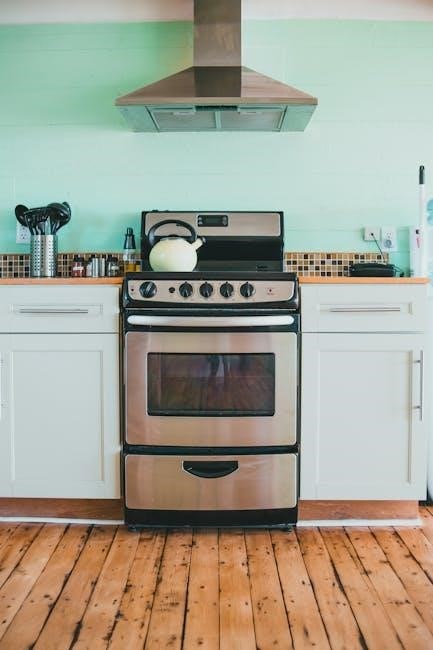
Mastering the GE XL44 oven controls is simple, allowing precise temperature settings and function selection for baking, roasting, and utilizing the convenient “LITE” position.
Using the Oven Controls
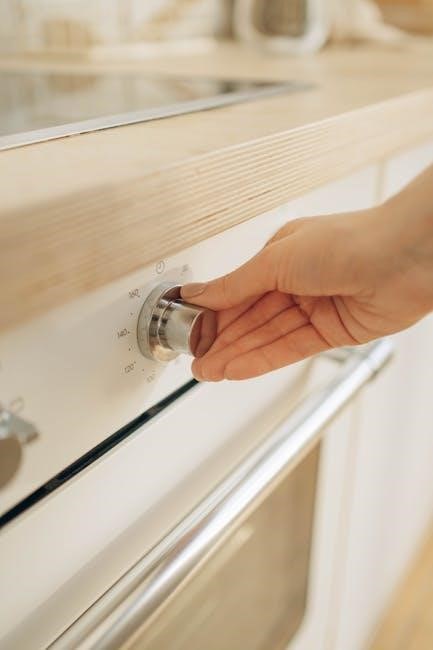
The GE XL44 oven features user-friendly controls designed for intuitive operation. The control knob allows you to select various oven functions, including Bake, Roast, and the convenient “LITE” position for warming. To begin, simply turn the knob to your desired function.
For temperature adjustments, rotate the knob to the desired degree setting, ensuring it aligns with the marked indicators. The oven will automatically preheat to the selected temperature. Remember that features and appearance may vary slightly depending on your specific model (JGBS03, JGBS04, etc.).
Always refer to the manual for detailed instructions specific to your model’s control panel layout. Understanding these controls will unlock the full potential of your GE XL44 oven, ensuring consistent and delicious cooking results. Proper use guarantees safe and efficient operation.
Setting Oven Temperature
Precisely controlling oven temperature is crucial for successful baking and roasting with your GE XL44. After selecting your desired cooking function (Bake, Roast, etc.), use the control knob to set the temperature. Rotate the knob clockwise to increase the temperature and counterclockwise to decrease it.
The temperature markings on the control panel indicate specific degree settings. Ensure the indicator aligns accurately with your desired temperature for optimal results. Remember that preheating is essential; allow the oven to reach the set temperature before placing food inside.
Consistent temperature is key, so avoid frequent opening of the oven door during cooking. Refer to recipes for recommended temperature settings and adjust as needed. Proper temperature control ensures evenly cooked and delicious meals every time.
Baking and Roasting Functions
The GE XL44 oven offers dedicated Baking and Roasting functions for versatile cooking. The ‘Bake’ function provides consistent heat from the bottom element, ideal for cakes, cookies, and casseroles. Ensure racks are positioned correctly for even heat circulation.
The ‘Roast’ function utilizes the broil element for higher heat, perfect for meats and vegetables, creating a browned exterior and juicy interior. For roasting, use a roasting pan and consider using the ‘LITE’ position for gentler heat during extended cooking times.
Always consult recipes for specific temperature and time recommendations. Proper rack placement and pan selection are vital for optimal results with both baking and roasting. Experiment to discover your preferred settings for various dishes!
The “LITE” Position Functionality
The “LITE” position on your GE XL44 oven control knob offers a unique, lower-heat setting. It’s not a traditional temperature, but rather a reduced output from the bake element, typically around 200°F. This is exceptionally useful for keeping cooked foods warm without overcooking, or for slow-cooking delicate items.
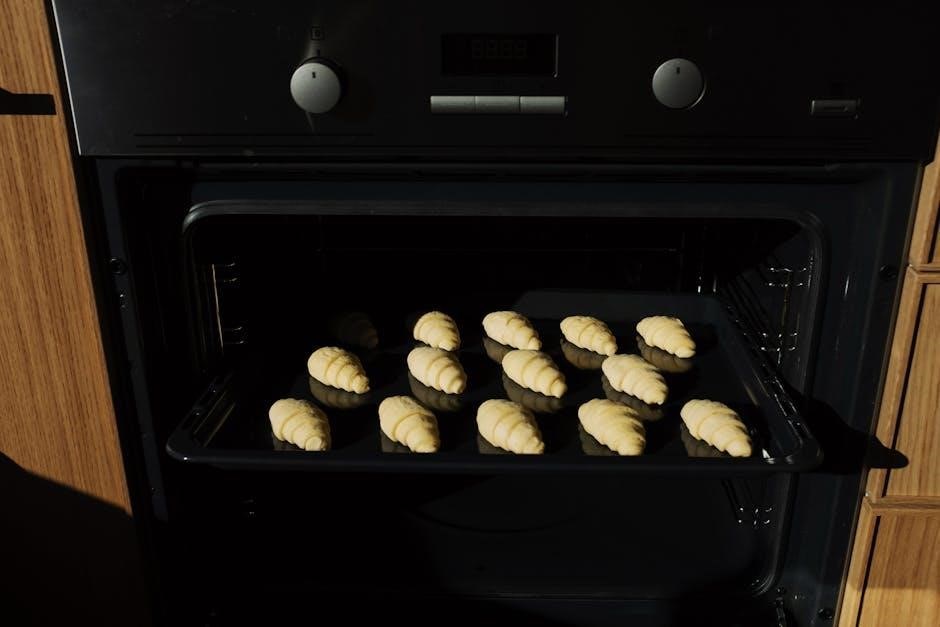
Utilize the “LITE” position for proofing dough, gently warming sauces, or holding casseroles until serving. It’s also ideal for extended baking tasks where a lower temperature is desired. Remember, the “LITE” position is not intended for initial cooking; it’s best suited for maintaining temperature.
Monitor food closely when using the “LITE” setting, as cooking times will be significantly longer than with standard baking temperatures.
Surface Burner Operation
The GE XL44 range features surface burners with adjustable flame sizes, providing versatile cooking options. Turn the control knob to precisely regulate heat output for optimal results.
Adjusting Flame Size
Precisely controlling the flame size on your GE XL44 range is crucial for successful cooking. The control knobs associated with each surface burner allow for easy adjustment, ranging from a low simmer to a powerful boil. To increase the flame, simply rotate the knob clockwise; conversely, turning it counterclockwise will decrease the flame.
It’s important to match the flame size to the cookware’s diameter to ensure efficient heat transfer and prevent wasted energy. A flame extending beyond the bottom of the pan doesn’t contribute to faster cooking and can potentially damage surrounding cabinetry. Always start with a lower flame setting and gradually increase it as needed, monitoring the food closely to prevent burning or scorching.
Remember that different burners may have varying maximum heat outputs. Refer to the range’s specifications for details. Proper flame adjustment not only optimizes cooking performance but also enhances safety by minimizing the risk of flare-ups or overheating.
Recommended Cookware: Flat-Bottomed Woks
For optimal performance on your GE XL44 range, we specifically recommend using flat-bottomed woks when preparing stir-fries or Asian-inspired dishes. Unlike traditional round-bottom woks, flat-bottomed versions provide maximum contact with the burner grates, ensuring efficient heat distribution and faster cooking times. This is particularly important for achieving the high heat necessary for authentic wok cooking.
However, it’s crucial to use the correct support ring. Do not use a wok on any other support ring as this can lead to instability and potential hazards. Ensure the wok sits securely and evenly on the designated ring. Using a flat-bottomed wok maximizes heat transfer and prevents uneven cooking, resulting in perfectly seared and flavorful meals.
Always prioritize safety when using woks, as they can become extremely hot. Use appropriate oven mitts or pot holders when handling.
Wok Usage Guidelines & Restrictions
When utilizing a flat-bottomed wok on your GE XL44 range, adherence to specific guidelines is essential for safe and effective cooking. Always ensure the wok is properly seated on the designated support ring, preventing wobbling or tipping. Never attempt to use a round-bottomed wok, as it will not sit securely and poses a significant safety risk.
Monitor the flame size carefully, adjusting as needed to maintain consistent heat without causing excessive flare-ups. Avoid overcrowding the wok, as this can lower the temperature and result in steaming instead of stir-frying. Be mindful of hot oil splatters and use appropriate protective gear.
Regularly inspect the support ring for stability and cleanliness. Do not leave a hot wok unattended and allow it to cool completely before cleaning.
Installation and Safety
Proper installation is crucial for safe operation. This section details instructions, precautions, and potential hazards to ensure a secure setup and usage experience.
Installation Instructions Overview
Before beginning installation, carefully review all provided documentation, including this manual and any accompanying installation guides. Ensure the intended location meets the specified requirements for electrical connections, gas supply (if applicable), and ventilation. Proper grounding is essential for safety; verify a suitable grounding system is in place.
Carefully unpack the range, inspecting for any shipping damage. Level the appliance using adjustable feet, ensuring stability. Connect the gas supply line (if applicable) according to local codes, using approved fittings and sealant. Electrical connection should be performed by a qualified technician, adhering to all applicable electrical codes.
After connections are made, test the oven and surface burners to confirm proper operation. Check for gas leaks using a soapy water solution. Always follow local regulations and manufacturer’s recommendations throughout the installation process to guarantee a safe and functional setup.
Safety Precautions and Warnings
Always exercise caution when operating the GE XL44 range; Never leave the oven unattended during use, especially when children are present. Avoid touching heating elements or interior surfaces while hot to prevent burns. Ensure proper ventilation when using the surface burners to prevent carbon monoxide buildup.
Do not use flammable materials near the range, and keep combustible items away from heating elements. Regularly inspect the gas supply line (if applicable) for leaks, and address any issues promptly. Never attempt to repair the appliance yourself; contact a qualified technician for service.
Be mindful of potential hazards associated with hot surfaces and electrical components. Improper use can be hazardous to your health. Always follow the instructions outlined in this manual to ensure safe operation and prevent accidents.
Potential Hazards and Health Considerations
Operating the GE XL44 range presents potential hazards requiring careful attention. Prolonged exposure to high temperatures can cause burns, so use oven mitts and caution. Gas burners produce carbon monoxide, a colorless, odorless gas; ensure adequate ventilation to prevent poisoning. Electrical components pose shock risks – never operate with damaged cords or wet hands.
Improper cleaning can release harmful fumes; avoid abrasive cleaners and ensure thorough rinsing. Food safety is crucial; cook meats to recommended internal temperatures to prevent foodborne illness. Be aware of potential hazards to your health from improper use or maintenance.
Regularly inspect the appliance for damage and address any issues promptly. Consult a qualified technician for repairs to minimize risks and ensure safe operation.
Technical Service Information
Access the comprehensive GE XL44 Technical Service Guide for detailed diagrams, troubleshooting steps, and repair procedures to efficiently address appliance issues.
Accessing the Technical Service Guide
The GE XL44 Series Range Technical Service Guide is readily available online through the Internet Archive, offering a valuable resource for qualified technicians and service personnel. This digital document, identified as “GE_XL44_Series_Range_Technical_Service_Guide,” was added on May 22, 2020, and is approximately 37.4MB in size.
It contains in-depth schematics, component locations, diagnostic charts, and detailed repair instructions specifically tailored for the XL44 range models. This guide is crucial for understanding the internal workings of the appliance and performing effective repairs.
Technicians can utilize this resource to quickly identify and resolve common issues, ensuring efficient service and minimizing downtime. The guide’s comprehensive nature makes it an indispensable tool for maintaining the performance and longevity of GE XL44 series ranges.
Troubleshooting Common Issues
Addressing typical problems with your GE XL44 range often begins with simple checks. If the oven isn’t heating, verify the power supply and ensure the control is set correctly. For surface burner issues, confirm the igniter is sparking and the gas supply is active. A flickering flame might indicate a dirty burner port, requiring cleaning.
Consult the Technical Service Guide for detailed diagnostic procedures and component testing. Common concerns include temperature inaccuracies, uneven baking, and burner malfunctions. Always prioritize safety by disconnecting power before attempting any repairs.
If you’re uncomfortable with appliance repair, it’s best to contact a qualified technician. Remember that features and appearance may vary between models, so referencing the specific manual for your unit is crucial for accurate troubleshooting.