
Asa di Var: A Comprehensive Overview
Asa di Var, a foundational composition by Guru Nanak, is a “ballad of hope” central to Sikh practice, often recited during the morning service.
Historical Context and Origins
Asa di Var originates with Guru Nanak, the founder of Sikhism, and its recitation dates back to his time. Initially sung by Bhai Mardana, it quickly became integral to the early morning Amrit Vela service.
The composition was formally included in the Guru Granth Sahib by Guru Angad, acknowledging Guru Nanak as the primary author, with added slokas.
The Meaning of “Asa di Var”
“Asa di Var” translates to “A ballad of hope,” combining “Asa” (hope/musical measure) and “Var” (lyrical verse), embodying spiritual yearning.
Etymological Breakdown of the Term
“Asa di Var” dissects into three components: “Var” signifies a lyrical verse or ballad. “Asa” denotes hope, but also functions as a musical measure within classical Indian music. The particle “di” or “ki” simply means “of,” connecting these elements to form “A ballad of hope,” revealing its poetic and musical roots.
“Ballad of Hope”: The Core Essence
“Asa di Var” embodies a profound message of hope, deeply ingrained in Sikh spirituality. Believed to fulfill wishes when recited with sincere devotion, it’s more than just a hymn; it’s a pathway to spiritual upliftment. This “ballad” encapsulates Guru Nanak’s vision of faith and optimistic yearning.

Guru Nanak and the Composition
Guru Nanak, the founder of Sikhism, is the primary author of Asa di Var, initially recited and developed during his lifetime, establishing a sacred tradition;
Guru Nanak as the Primary Author
Guru Nanak authored the core twenty-four stanzas of Asa di Var, alongside fifty-nine slokas attributed to him. The composition’s initial form, as recorded by Bhai Gurdas, comprised these stanzas and slokas. His authorship is affirmed within the Guru Granth Sahib’s title: “Salok bhi mahalle pahile ke likhe.”
Initial Recitation and Development
Bhai Mardana, a companion of Guru Nanak, is traditionally recognized as the first to sing Asa di Var. The composition’s early recitation occurred during Guru Nanak’s lifetime, establishing a custom of morning recitation. It initially consisted of twenty-four stanzas and additional slokas penned by the Guru himself.
Structure and Components of Asa di Var
Asa di Var comprises twenty-four stanzas, totaling fifty-nine slokas; forty-five are by Guru Nanak, and fourteen are attributed to him as well.
The Twenty-Four Stanzas
Asa di Var is structured around twenty-four distinct stanzas, each contributing to the overall narrative and philosophical depth of the composition. These stanzas, penned primarily by Guru Nanak, form the core of this significant Sikh hymn. They are meticulously arranged to convey a progressive spiritual journey, exploring themes of hope and the human condition.
Fifty-Nine Slokas: Distribution by Author
Asa di Var comprises fifty-nine slokas, revealing a collaborative yet primarily Guru Nanak-driven authorship. Guru Nanak contributed forty-five slokas, establishing the foundational verses. Guru Angad added fourteen slokas, enriching the composition. This distribution, noted in the Guru Granth Sahib, highlights both individual contributions and the evolving tradition.
Musical Aspects and Recitation
Asa di Var is traditionally recited to the tune of an ancient folk ballad, Asraja, and performed by ragis, skilled religious musicians, enhancing its spiritual impact.
The Tune of an Old Folk Ballad (Asraja)
Asa di Var’s musical direction, as recorded, specifies recitation in the melody of a historical folk ballad centered around Prince Asraja. This Tun, or musical measure, provides the foundational rhythm. The choice reflects a connection to the people and their cultural heritage, making the spiritual message accessible and relatable through a familiar musical form.
Role of Ragis (Religious Musicians)
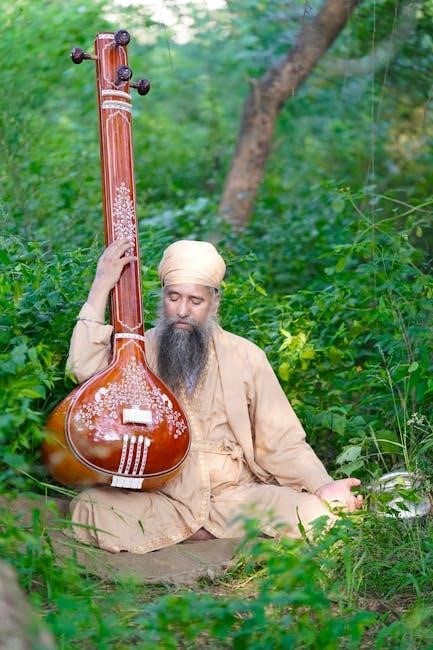
Ragis, or religious musicians, are integral to the performance of Asa di Var. They skillfully sing the composition as part of the early morning service, ensuring its proper melodic delivery and devotional atmosphere. Their role extends to punctuating the verses with supplementary hymns, enriching the spiritual experience for the congregation.

Significance in Sikh Practice
Asa di Var holds immense importance, recited daily during Amrit Vela, the morning service, and is believed to fulfill the wishes of devoted listeners.
Daily Morning Service (Amrit Vela)
Asa di Var is integral to the Sikh Amrit Vela, the early morning devotional practice. Sung by ragis (religious musicians), its recitation sets a spiritual tone for the day. This practice originates with Guru Nanak himself, establishing a tradition of hopeful, devotional beginnings, fostering a connection with the divine.
Belief in Wish Fulfillment
A significant belief surrounds Asa di Var: sincere recitation and singing, imbued with true faith, are thought to fulfill one’s hopes and wishes. This conviction underscores the power of devotional practice within Sikhism, linking spiritual connection to positive outcomes and divine grace.
Chakkas and Supplementary Hymns
Chakkas, quatrains by Bhai Mardana, preface each stanza, while hymns from other sources punctuate the singing, enriching the Asa di Var recitation.
The Role of Bhai Mardana’s Chakkas
Bhai Mardana’s chakkas, or sextettes of quatrains, are integral to the Asa di Var recitation; These are prefixed to each stanza, providing a musical and thematic introduction. They enhance the devotional experience and were composed specifically to accompany Guru Nanak’s verses, adding depth to the hymn.
Integration of Hymns from Other Sources
During recitation of Asa di Var, illustrative hymns from Bhai Gurdas and passages from Asa and Gujari are interspersed. These supplementary texts, considered approved compositions, punctuate the singing, enriching the devotional experience and providing further context to Guru Nanak’s core message.

Authorship Details and Attributions
Asa di Var primarily originates from Guru Nanak, with twenty-four stanzas and fifty-nine slokas, including contributions from Guru Angad totaling forty-five and fourteen respectively.
Guru Angad’s Contribution
Guru Angad, the second Sikh Guru, played a vital role in preserving and organizing Asa di Var. He meticulously included the composition within the Guru Granth Sahib, noting the slokas authored by Guru Nanak with the phrase “salok bhi mahalle pahile ke likhe,” acknowledging the First Guru’s authorship.
Slokas by Guru Nanak
Guru Nanak composed the core of Asa di Var, consisting of twenty-four stanzas and a significant number of slokas. Specifically, forty-five of the fifty-nine slokas within the Var are attributed to his authorship, forming the foundational verses of this hopeful and spiritually resonant ballad.
The Var in the Guru Granth Sahib
Asa di Var is included in the Guru Granth Sahib, identified with the title “Salok bhi mahalle pahile ke likhe,” acknowledging Guru Nanak’s authorship.
Inclusion and Placement within the Holy Book
Asa di Var appears within the Guru Granth Sahib, carefully placed to reflect its significance. Guru Angad specifically noted its inclusion with the heading “Salok bhi mahalle pahile ke likhe,” clearly attributing both stanzas and slokas to Guru Nanak, the first Guru, solidifying its sacred position.
Significance of the Title “Salok bhi mahalle pahile ke likhe”
“Salok bhi mahalle pahile ke likhe”, penned by Guru Angad, explicitly identifies Guru Nanak as the author of both the Asa di Var’s stanzas and slokas. This inscription within the Guru Granth Sahib affirms the composition’s divine origin and Guru Nanak’s authorship, establishing its authenticity.

Themes and Philosophical Underpinnings
Asa di Var profoundly explores themes of hope, spiritual yearning, and contemplation on the human condition, offering guidance towards a meaningful existence.
Hope and Spiritual Yearning
Asa di Var embodies a powerful message of hope, suggesting that sincere recitation and devotion can lead to the fulfillment of one’s deepest wishes. This composition deeply resonates with the human desire for spiritual connection and a longing for divine grace, encouraging a persistent pursuit of inner peace and enlightenment.
Reflection on the Human Condition
Asa di Var offers profound reflections on the complexities of human existence, acknowledging both the joys and sorrows inherent in life. The verses contemplate the transient nature of worldly possessions and emphasize the importance of detaching from ego, ultimately seeking solace in a higher power and spiritual understanding.
Influence and Legacy
Asa di Var profoundly impacted Sikh musical tradition and continues to hold immense relevance in contemporary practice, embodying hope and spiritual yearning for devotees.
Impact on Sikh Musical Tradition
Asa di Var’s tune, based on the folk ballad of Asraja, significantly shaped early Sikh musical forms. The incorporation of Bhai Mardana’s chakkas and supplementary hymns enriched the musical landscape.
This composition established a precedent for ragis (religious musicians) and continues to influence kirtan (devotional singing) within Sikh traditions today.
Continuing Relevance in Contemporary Practice
Asa di Var remains a vital part of the daily Amrit Vela (morning service) for Sikhs worldwide, fostering spiritual connection. The belief in wish fulfillment through sincere recitation persists.
Its themes of hope and yearning resonate deeply with modern audiences, ensuring its enduring significance in contemporary Sikh devotional life and practice.
Detailed Analysis of Key Slokas
Asa di Var’s fifty-nine slokas, authored primarily by Guru Nanak, offer profound philosophical insights, explored through verse and commentary for deeper understanding.
Exploring Specific Verses and Their Meanings
Key slokas within Asa di Var delve into themes of hope and the human condition, revealing Guru Nanak’s spiritual yearning. Interpretations vary, yet consistently emphasize devotion and truthful living. Analyzing these verses unveils nuanced layers of meaning, prompting reflection on one’s own path and connection to the Divine.
Interpretations and Commentary
Scholarly analyses of Asa di Var highlight its poetic depth and philosophical richness. Commentaries explore the verses’ allegorical nature, revealing insights into Sikh theology and ethics. Contemporary understanding emphasizes the Var’s universal message of hope, compassion, and the pursuit of spiritual liberation for all beings.

Comparison with Other Sikh Compositions
Unlike other Vars, Asa di Var uniquely blends folk ballad tradition with profound spiritual themes, establishing its distinct style within Sikh scripture.
Similarities and Differences in Style and Theme
Asa di Var shares thematic concerns—hope, yearning, the human condition—with other Sikh compositions, yet distinguishes itself through its ballad form and musical setting, Asraja. While other Vars explore diverse themes, this one’s focus on hope is particularly prominent, influencing its lyrical and musical character.
Unique Characteristics of Asa di Var
Asa di Var uniquely blends poetic verse with musical tradition, utilizing the Asraja tune of a folk ballad. The inclusion of Bhai Mardana’s chakkas and supplementary hymns further distinguishes it. Its structure—twenty-four stanzas and fifty-nine slokas—creates a distinctive devotional experience.
Modern Interpretations and Scholarly Research
Contemporary understanding focuses on the Var’s message of hope and spiritual yearning, while academic studies analyze its philosophical depth and musical structure.
Contemporary Understanding of the Var’s Message
Today, Asa di Var resonates as a timeless exploration of the human condition and a powerful call to spiritual awakening. Its core message emphasizes hope, faith, and the pursuit of divine connection. Scholars and practitioners alike interpret the verses as guidance for navigating life’s challenges with resilience and devotion, fostering inner peace and a deeper understanding of Sikh principles.
Academic Studies and Analyses
Scholarly research on Asa di Var focuses on its historical context, linguistic nuances, and philosophical depth. Analyses explore Guru Nanak’s poetic style, the musical structure (Asraja tune), and the integration of Bhai Mardana’s contributions. Studies also examine the Var’s enduring influence on Sikh musical tradition and its relevance in modern times.
Resources for Further Study
SikhiWiki offers a comprehensive overview, while published books and articles delve deeper into the historical and philosophical aspects of Asa di Var.
SikhiWiki and Other Online Resources
SikhiWiki (https://www.sikhiwiki.org/index.php/Asa_di_Var) provides a readily accessible encyclopedia entry detailing the Asa di Var’s origins, structure, and significance. Further online exploration may reveal scholarly articles and translations. Searching for “Asa di Var PDF” can yield downloadable versions of the composition and associated commentaries, aiding in deeper study and understanding of this core Sikh text.
Published Books and Articles
While a dedicated, singular book focusing solely on an “Asa di Var PDF” is uncommon, numerous publications on Sikh history, philosophy, and Gurbani (Sikh scripture) contain detailed analyses. Scholarly articles exploring the Var’s themes and musicality are available through academic databases. Examining commentaries on the Guru Granth Sahib will also provide valuable insights into this important composition.
The Role of Bhai Mardana in the Tradition
Bhai Mardana, Guru Nanak’s companion, was the first to sing Asa di Var, contributing significantly to its musicality and early dissemination.
Bhai Mardana as the First Singer
Bhai Mardana holds a unique position as the initial singer of Asa di Var, performing it in Guru Nanak’s presence. This established a vital tradition, linking the composition directly to its origin. His musical rendition was instrumental in spreading the Var’s message, solidifying its place within early Sikh practice and devotional life.
His Contribution to the Musicality of the Var
Bhai Mardana’s role extended beyond initial performance; he profoundly shaped the Asa di Var’s musicality. The Var was originally set to the tune of an old folk ballad, “Asraja,” and Mardana’s skill brought this melody to life, establishing a musical framework for future ragis and devotional singing.